
Still Tight After Years of Stretching?
It Might Not Be Your Muscles — It Might Be Your Nervous System.
If you’ve been stretching diligently for years but still feel tight—in your hips, hamstrings, or spine—you’re not alone. And no, it doesn’t necessarily mean you’re doing it wrong or that your body is “stubborn.”
In many cases, your body isn’t tight.
It’s misinformed.
That lingering tension you feel isn’t always about short muscles or lack of flexibility. More often, it’s your nervous system reacting to what it perceives as threat—and your fascia responding by locking things down to keep you safe.
Let’s unpack what that actually means.
Fascia: Not Just “Wrapping,” But a Sensory Organ
Most people think of fascia as just connective tissue that wraps muscles. But research over the last two decades has shown that fascia is far more complex—and far more intelligent—than that.
Fascia is richly innervated with mechanoreceptors and nociceptors, meaning it constantly sends information to your brain about:
Movement and joint position
Pressure and load
Tension and stretch
Orientation in space
In other words, fascia plays a huge role in proprioception—your brain’s understanding of where your body is and how it’s moving.
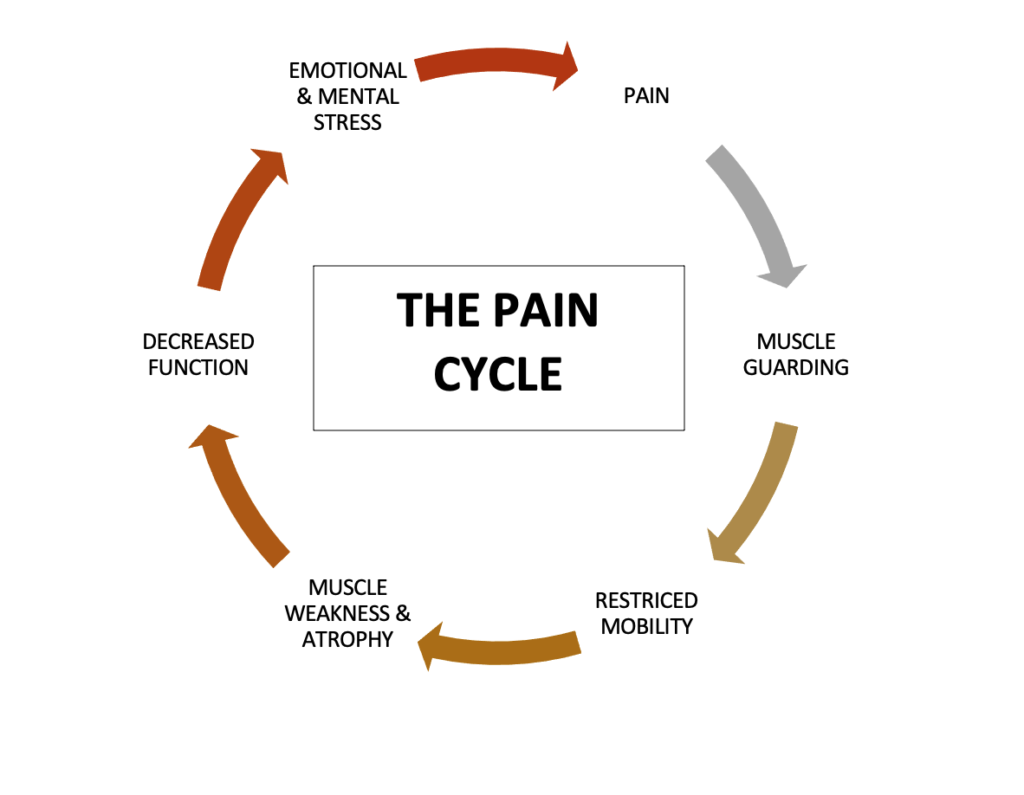
When the Signals Get Distorted
Over time, fascia can lose its ability to glide and transmit clean information. This often happens due to:
- Previous injuries
- Repetitive overuse
- Poor load management
- Chronic stress or shallow breathing
- Long periods of protective bracing
When this happens, the signals traveling from your body to your brain become noisy or unclear.
And when the brain isn’t sure what’s happening?
It defaults to safety.
That usually looks like:
- Increased bracing
- Shallow or held breath
- Global tension
- That persistent “tight” feeling that stretching doesn’t fix
From a nervous system perspective, this makes perfect sense. Tension is protection.
Why Stretching Often Doesn’t Work (and Can Feel Worse)
Static stretching focuses on pulling tissues into range—but if the nervous system doesn’t feel safe, it can interpret that pull as a threat.
So instead of letting go, the body may:
- Guard harder
- Increase muscle tone after stretching
- Rebound into even more tightness
This is why many people say:
“I stretch all the time, but I still feel stiff.”
or
“I actually feel worse after stretching.”
It’s not a willpower issue. It’s a communication issue between the body and the brain.
A Different Approach: Restore Clarity, Not Just Range
In Unstuck: Fascia & Mobility, we don’t chase flexibility for flexibility’s sake.
We focus on restoring clarity in the system—so the nervous system can downregulate on its own.
That means:
- Retraining fascia to slide, glide, and sense again
- Using breath to influence nervous system tone
- Applying gentle resistance and controlled variability
(“gentle chaos”) to reintroduce meaningful feedback - Improving the elastic and responsive qualities of fascia rather than forcing length
When the input improves, something interesting happens:
The body often organizes itself more efficiently—without being forced.
Range comes back not because we stretched harder, but because the brain no longer feels the need to protect.
And when safety improves:
- Movement becomes smoother
- Breathing deepens
- Tension reduces
- Freedom returns
Not because you “released” something—but because your system finally trusted itself enough to let go.
If stretching hasn’t worked for you, maybe it’s time to stop pulling—and start listening.
📍 Unstuck: Fascia & Mobility
🕛 Tuesdays — 12pm & 7pm
Book your first session here
💬 If you prefer personal attention, book your Private Training trial here at only $97.