
Building Strength in Hyperextended Knees
Not Avoiding Them, Not “Fixing” Them
Building strength in hyperextended knees isn’t about chasing range, avoiding it, or trying to “correct” something your body naturally does.
It’s about learning how to manage what your body already does — with intention.
Have hyperextended knees?
So do I.
And instead of treating them like a problem to avoid, I train them with intention — so they’re strong, stable, and supported within their natural range.
Hyperextension itself isn’t “bad”.
What makes hyperextension risky isn’t the position — it’s when your body lacks the strength, awareness, or proprioception to manage that position during real life.
Think:
- Walking downhill
- Decelerating suddenly
- Landing, stopping, or changing direction
- Standing for long periods while locking the knees unconsciously
When the nervous system doesn’t trust that end range, the body often compensates elsewhere — hips, lower back, or ankles — and that’s usually where discomfort shows up.
So what do we actually train?
Instead of avoiding hyperextension completely, we train strength inside the range your knee already goes into.
That means teaching the quads and hamstrings to:
- Co-contract near end range
- Control load rather than collapse into ligaments
- Sense where the knee is in space
Research consistently shows that strengthening muscles at or near end range improves joint stability and load tolerance — especially when combined with slow, controlled execution.
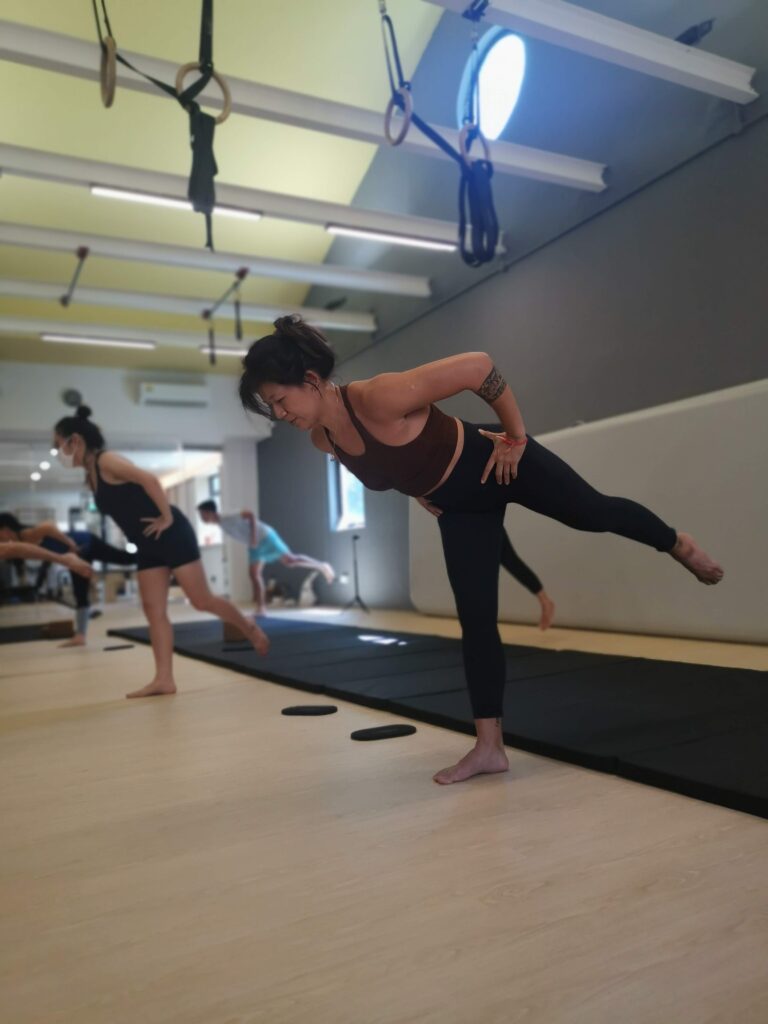
This is where proprioception matters.
- Snap into hyperextension without control
- Rely on ligaments instead of muscles
- Feel unstable even when “strong”
That’s why these drills aren’t about brute force — they’re about awareness, control, and support.
The goal isn't to fix your hyperextension.
The goal is to help you build enough muscular support and nervous system confidence
so your knees stay stable — even at end range.
Important note:
These movements are best suited for individuals who already have
some baseline strength and body awareness in their knees and hamstrings.
If you’re dealing with pain, recent injury, or instability,
working with a coach for regressions and progressions is strongly recommended.
📍 Private training for hyperextended knees
Build strength, awareness, and control within your natural range — so your knees feel supported, not restricted.
First private session: $97